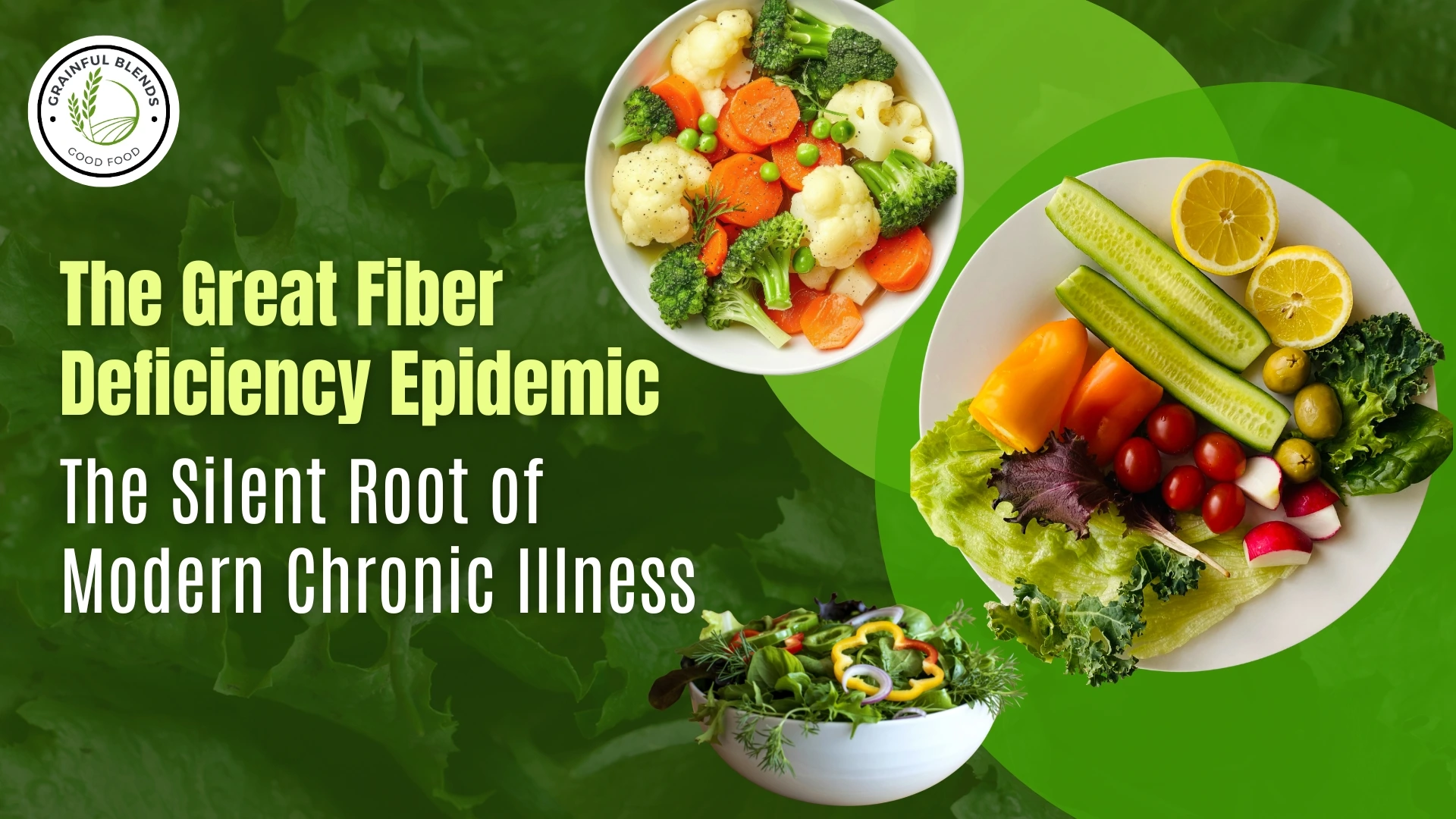
The Great Fiber Deficiency Epidemic: The Silent Root of Modern Chronic Illness
We live in an era characterized by hyper-vigilance over what we eat. Gym-goers obsessively track their macronutrient ratios, dieters debate the merits of cutting carbohydrates to zero, and supermarket shelves are flooded with products boasting about their added protein, zero sugar, or low-calorie footprints.
Yet, amidst all this nutritional noise, the vast majority of people are completely blind to a massive, public health emergency unfolding right on their dinner plates. It isn’t a structural lack of protein, nor is it a sudden deficiency in exotic, expensive superfood powders.
It is The Fiber Deficiency Epidemic.
Accorogding to stark epidemiological and nutritional data, an astonishing 95% of adults fail to meet the minimum daily recommended intake for dietary fiber. While the average adult consumes a meager 15 grams of fiber per day, public health organizations state that women need at least 25 grams and men require 38 grams daily for baseline physiological functioning.
This massive, nationwide nutritional shortfall—often referred to by gastroenterologists and researchers as the “Fiber Gap” is not just an inconvenient statistic about constipation. It represents a fundamental divergence from the evolutionary diet that shaped human physiology.
By systematically stripping fiber away from our food supply over the last century, we have inadvertently starved our gut microbiomes, compromised our intestinal barriers, and laid the groundwork for an unprecedented surge in metabolic, cardiovascular, and autoimmune diseases.
What Is Fiber, Really? (And Why Your Body Is Starving for It)
To understand how a lack of fiber wreaks such widespread havoc on human health, we have to look past the outdated notion that fiber is merely inert “roughage” designed to keep us regular.
Dietary fiber is an incredibly diverse, chemically complex class of plant-based carbohydrates that lack the specific molecular bonds that human digestive enzymes can break down. When you eat fiber, it passes through your mouth, stomach, and small intestine completely intact.
[Mouth & Stomach] ──> [Small Intestine] ──> [Large Intestine (Colon)]
│ │ │
(Untouched by human) (Passes through) (Fermented by trillions of
digestive enzymes completely intact beneficial gut microbes)
Because our own bodies cannot digest it, fiber lands directly into our large intestine (the colon). Here, it serves a profoundly critical purpose: it acts as the primary fuel source for the trillions of microbes that make up the human gut microbiota.
When we slice open a plant food, we encounter two primary forms of fiber, both of which are vanishing from the modern processed diet:
1. Soluble Fiber
Soluble fiber dissolves in water to form a viscous, gelatinous substance. Found abundantly in foods like oats, beans, Brussels sprouts, and flaxseeds, this gel acts as a metabolic speed-bump. It slows down gastric emptying, thickens the digestive contents, and dampens the rate at which sugars and cholesterol enter the bloodstream.
2. Insoluble Fiber
Insoluble fiber does not dissolve in water. Found in the outer skins of vegetables, fruit, and the structural hulls of whole grains, it retains its coarse structure throughout the entire digestive tract. It acts like a biological broom, adding physical bulk to stool and stimulating the sweeping muscular contractions (peristalsis) that keep waste moving efficiently out of the body.
When a society stops eating these two foundational components, the entire internal architecture of the human body begins to break down.
Anatomy of an Epidemic: How the Fiber Gap Fuels Chronic Illness
When you continuously starve your body of dietary fiber, the consequences extend far beyond simple digestive discomfort. Over time, a low-fiber lifestyle alters your cellular biology, immune responses, and metabolic health.
1. The Extinction of the Gut Microbiome
Your colon is home to a massive, bustling ecosystem of bacteria that are fundamentally tied to your survival. When you consume a diet rich in diverse plant fibers, these beneficial bacterial strains thrive, multiplying into a resilient, highly protective community.
However, when you feed your body a standard modern diet dominated by ultra-processed foods, refined flours, and isolated sugars, you cut off the fuel supply to your microbial allies. Deprived of fiber, these beneficial bacterial populations begin to drop off rapidly, a state known as dysbiosis.
Worse yet, evolutionary and multi-generational studies show that when a population starves its microbiome over generations, specific critical strains of health-promoting bacteria go entirely extinct, leaving our immune and digestive systems permanently compromised.
2. The Autodigestion of the Intestinal Lining
What happens when your gut bacteria have nothing to eat? They don’t just quietly fade away; they adapt to survive.
The inner wall of your colon is lined with a thick, protective layer of mucus made up of proteins called mucins. This mucus barrier serves as a vital shield, keeping trillions of residential microbes from making direct, physical contact with the delicate, single-cell epithelial layer of your gut wall.
[ Gut Lumen: Fiber-Starved Pathogenic Microbes ]
──────────────────────────────────────────────────────────────────────
░░░░░░░░░░░░░░ PROTECTIVE MUCUS LINING (ERODED) ░░░░░░░░░░
──────────────────────────────────────────────────────────────────────
[ Microscopic Epithelial Cells Exposed to Pathogens and Toxins ]
When you stop eating fiber, your resident microbes are forced to look for alternative carbon sources to stay alive. Landmark animal and clinical trials have revealed that fiber-starved gut bacteria turn around and begin literally eating the protective mucus lining of your gut for fuel.
As this protective shield is slowly digested from the inside out, the mucus barrier thins dangerously. This allows opportunistic pathogens, toxic bacterial cell-wall fragments (lipopolysaccharides, or LPS), and undigested food particles to make direct contact with your gut wall, slipping through loosened cellular gates into your systemic bloodstream. This condition, known as intestinal permeability or “leaky gut,” sounds a continuous, system-wide immune alarm.
3. Chronic, Systemic Inflammation
Once toxic particles like LPS breach your compromised intestinal wall and flood your bloodstream, your immune system views them as an immediate, life-threatening invasion. White blood cells engage these foreign particles, triggering an immediate inflammatory counter-attack.
Because a low-fiber diet ensures that your gut barrier remains continuously leaky, this toxic influx never stops. As a result, your immune system remains perpetually activated, shifting your entire body into a state of low-grade, systemic chronic inflammation.
Circulating pro-inflammatory cytokines like Interleukin-6 (IL-6) and Tumor Necrosis Factor-alpha (TNF-alpha) travel through your vascular highway, slowly damaging healthy tissues, destabilizing arterial walls, and irritating nerve endings.
4. Metabolic Dysfunction and Insulin Resistance
Fiber plays an irreplaceable role in managing how your body processes energy. When you consume refined, fiber-stripped carbohydrates (such as white bread, white rice, or sugary treats), your digestive enzymes process them near-instantly. Glucose surges into your bloodstream all at once, forcing your pancreas to pump out a massive, emergency wave of insulin to clear the sugar.
When you repeat this cycle multiple times a day, your cells are continuously bombarded by high levels of glucose and insulin. To protect themselves from this energetic overload, your cells downregulate their surface receptors, making themselves numb to insulin’s signals, a condition known as insulin resistance.
Fiber stops this process completely. By forming a gelatinous matrix inside your small intestine, soluble fiber slows down the absorption of glucose, turning a dangerous, volatile blood sugar spike into a gentle, controlled, and manageable curve that spares your pancreas and protects your metabolic health.
5. Dysregulated Cholesterol and Cardiovascular Risk
Your liver continuously manufactures bile acids, using cholesterol as the raw building material. These bile acids are secreted into your digestive tract to help break down dietary fats. In a healthy, high-fiber environment, soluble fiber binds tightly to these cholesterol-rich bile acids in the intestine, carrying them out of the body through bowel movements.
[Liver Uses Cholesterol to Make Bile] ──> [Secreted Into Intestines]
│
──────────────────────────────┴──────────────────────────────────────┐
▼ ▼
{ High-Fiber Diet } { Low-Fiber Diet }
│ │
Fiber binds to bile acids, dragging them Bile acids are effortlessly reabsorbed out of the body via stool. Liver must pull through the intestinal wall, causing more LDL from blood to build new bile. Systemic circulating LDL cholesterol torise.
│ │
▼ ▼
[ Lower Blood Cholesterol ] [ Higher Blood Cholesterol ]
When your diet lacks fiber, these bile acids are not trapped. Instead, they are effortlessly reabsorbed through the intestinal wall and recycled back to the liver. Because the liver doesn’t need to build new bile from scratch, it stops pulling low-density lipoprotein (LDL cholesterol) out of your blood. Circulating LDL levels rise, where they can easily become oxidized by systemic free radicals, penetrating your arterial walls and building the plaques that cause heart attacks and strokes.
Recognizing the Signs: Is Your Body Fiber-Deficient?
Because the consequences of the fiber epidemic happen deep within our cells, many people fail to connect their everyday health struggles to a lack of dietary fiber. Here are the clear warning signs your body is crying out for plant material:
- Persistent Constipation and Straining: If you pass stool fewer than three times a week, or if your bowel movements are hard, painful, and require significant straining, your digestive tract lacks the mechanical bulk and moisture provided by insoluble and soluble fiber.
- The Post-Meal Energy Crash: If eating a meal leaves you feeling overwhelmingly sluggish, irritable, and craving more sugar 90 minutes later, you are experiencing reactive hypoglycemia caused by a fiber-stripped blood sugar spike.
- Constant, Unappeasable Hunger: Fiber stretches the walls of your stomach and triggers the release of satiety hormones like Peptide YY (PYY) and Glucagon-Like Peptide-1 ($GLP-1$). Without it, your brain never receives the chemical signal that you are full, leaving you constantly scanning the pantry for snacks.
- Chronic Bloating and Gas: While a sudden, massive increase in fiber can cause temporary gas, chronic, long-term bloating on a low-fiber diet indicates a stagnant, slow-moving digestive tract where waste sits too long, creating an environment for harmful bacteria to ferment trapped waste.
Reversing the Epidemic: How to Close the Fiber Gap Safely
Reversing a decades-long fiber deficiency requires a strategic, intentional approach. If you attempt to go from 10 grams of fiber to 40 grams overnight, your starved, under-populated microbiome will be overwhelmed, resulting in intense abdominal cramping, painful gas, and severe bloating. To build up your internal ecosystem safely, follow these three evidence-based steps:
1. Increase Your Intake Gradually
Think of your microbiome as a muscle that needs to be trained. Increase your fiber intake slowly, adding just 3 to 5 extra grams per day every week. This gives your native bacterial populations the time they need to multiply, adapt, and build the enzymatic machinery required to process the increased workload.
2. Flood Your System with Water
Fiber behaves like a sponge. To do its job effectively, it requires a significant amount of fluid to expand, soften, and form that health-promoting gelatinous matrix. If you increase your fiber intake without matching it with a substantial increase in daily water consumption, the fiber can harden inside your colon, worsening your constipation. Aim to drink a minimum of 8 to 10 cups of pure water daily.
3. Prioritize Intact, Complex Plant Food Structures
Not all fiber is created equal. The wellness industry has attempted to capitalize on the fiber epidemic by packing highly processed foods with isolated, synthetic fibers like inulin or chicory root extract.
While these additives look good on a nutrition label, they lack the diverse structural matrices, micronutrients, and co-factors found in whole, intact plants. To experience true cellular healing, focus your diet on minimally processed whole grains, legumes, tubers, seeds, nuts, and cruciferous vegetables.
How Grainful Blends Resolves the Fiber Crisis
Rebuilding your daily fiber intake can feel incredibly overwhelming when you are balancing a hectic schedule, often requiring hours of complex meal prep and grocery sorting. This is exactly where Grainful Blends steps in as a vital health collaborator.
Instead of forcing you to rely on processed, low-fiber breakfast foods or synthetic fiber supplements that irritate a sensitive digestive tract, Grainful Blends offers unrefined, whole-cut grains and functional oats that keep the complex plant matrix fully intact. By building their recipes around minimally processed ancient grains, their products deliver a rich, balanced supply of both soluble and insoluble fibers directly to your plate.
Most notably, Grainful Blends provides an abundant source of beta-glucans a specific type of highly functional soluble fiber clinically proven to delay carbohydrate absorption, lower circulating LDL cholesterol, and optimize immune response. Incorporating Grainful Blends into your morning routine makes it effortless to meet your body’s evolutionary fiber needs, helping you crowd out refined foods, support your microbiome, and establish a bulletproof daily defense against systemic metabolic inflammation.
Fiber Profiles of Whole, Intact Foods
To make your journey toward optimal health simple, use this reference table to understand the distinct biological benefits of different fiber types found in whole, intact foods:
| Fiber Subtype | Primary Food Sources | Specific Clinical Benefit |
| Beta-Glucans | Oats, barley, ancient grains | Lowers LDL cholesterol; sharpens immune response |
| Resistant Starch | Cooked and cooled potatoes, green bananas | Feeds deep-gut colonocytes; boosts butyrate output |
| Pectin | Apples, citrus fruits, berries | Binds heavy metals; gels stool to prevent diarrhea |
| Lignans (Insoluble) | Flaxseeds, chia seeds, whole wheat | Speeds up bowel transit time; balances hormones |
| Cellulose | Celery, broccoli, dark leafy greens | Scrubs the colon wall; adds structural stool bulk |
| Inulin (Prebiotic) | Onions, garlic, Jerusalem artichokes | Selectively multiplies beneficial bifidobacteria |
The Ultimate Reward: The Power of Short-Chain Fatty Acids
When you consistently provide your body with the intact fiber it craves, you unlock the ultimate prize in human nutrition: the production of Short-Chain Fatty Acids (SCFAs).
As your beneficial bacteria ferment soluble and insoluble fibers in the lower digestive tract, they produce three primary therapeutic gases: acetate, propionate, and butyrate. These SCFAs act as powerful systemic signaling molecules that cross into your bloodstream and orchestrate total-body healing.
- Butyrate acts as the primary fuel source for the cells lining your colon, directly repairing a leaky gut by signaling tight junctions to close. It also shuts down the master genetic switch for inflammation (NF-kappaB), reducing the output of damaging cytokines.
- Propionate travels directly via the portal vein to your liver, where it actively inhibits the primary enzyme responsible for manufacturing cholesterol, lowering your cardiovascular risk naturally.
- Acetate crosses the blood-brain barrier and travels to the hypothalamus, where it acts as a natural appetite suppressant, regulating your nervous system to quiet food cravings and keep your metabolism steady.
Extinguishing the Internal Wildfire
The modern fiber deficiency epidemic is a quiet crisis, but its symptoms from chronic fatigue and digestive distress to insulin resistance and cardiovascular disease are loud, frustrating, and devastating. Your body isn’t designed to run on stripped, processed, fast-acting carbohydrates that treat your digestive tract like an empty transit tube.
Reclaiming your health does not require aggressive medical interventions or unsustainable diet trends. It requires returning to a lifestyle that respects your evolutionary biochemistry. By embracing structurally intact whole grains, feeding your gut microbiome the diverse fibers it desperately needs, and staying properly hydrated, you can close the fiber gap, restore your intestinal wall, and unlock the vibrant, long-term health you deserve.
References
- Yu, X., Pu, H., & Voss, M. (2024). Overview of anti-inflammatory diets and their promising effects on non-communicable diseases. British Journal of Nutrition, 132(8), 898-918. https://doi.org/10.1017/s0007114524001405[cite: 2]
- Schönenberger, K. A., Schüpfer, A.-C., Gloy, V. L., Stanga, Z., Kägi-Braun, N., & Reber, E. (2021). The effect of anti-inflammatory diets on pain in rheumatoid arthritis: a systematic review and meta-analysis. Clinical Nutrition ESPEN, 46, S682-S683. https://doi.org/10.1016/j.clnesp.2021.09.394[cite: 1]
- Barber, T. M., Kabisch, S., Pfeiffer, A. F., & Franks, H. (2020). The health benefits of dietary fibre. Nutrients, 12(10), 3209. https://doi.org/10.3390/nu12103209
- Gill, S. K., Rossi, M., Bajka, B., & Whelan, K. (2021). Dietary fibre in the prevention and management of immunologically mediated diseases. Nature Reviews Gastroenterology & Hepatology, 18(2), 101-115. https://doi.org/10.1038/s41575-020-00375-4